
EVIDENCE DESK · CAMPAIGN POSITION · AUG 2026
End routine police use of networked ALPRs.
Local governments should terminate contracts and remove cameras. States should ban warrantless law-enforcement ALPR use and cross-jurisdictional sharing.
No private Flock access · no live vehicle queries · no UCR proxy · synthetic lab ≠ vendor accuracy
FAULT CHAIN / INFORMATION LOSS
MANUFACTURER34 03 DTMsource record
MANUFACTURER34 10 DTMcamera read
token losstoken loss
COLLAPSED MATCH KEY34 DTM100 synthetic identifiers → 1 key
00 / CHOOSE A PATH
Four useful ways into the record.
CampaignBan networked ALPR police use
The demand, policy floor, government targets, and resident actions.
ScaleFindingsMapped cameras, public records, detections, and transparent denominators.
Cases29 incidentsEvidence-graded pathways of harm. Cases—not prevalence.
Remedy12 breakpointsWhere policy and practice can interrupt the path from alert to force.
01 / WHAT THE DATA SUPPORT
Three findings. Three different denominators.
FOOTPRINTDOCUMENTED
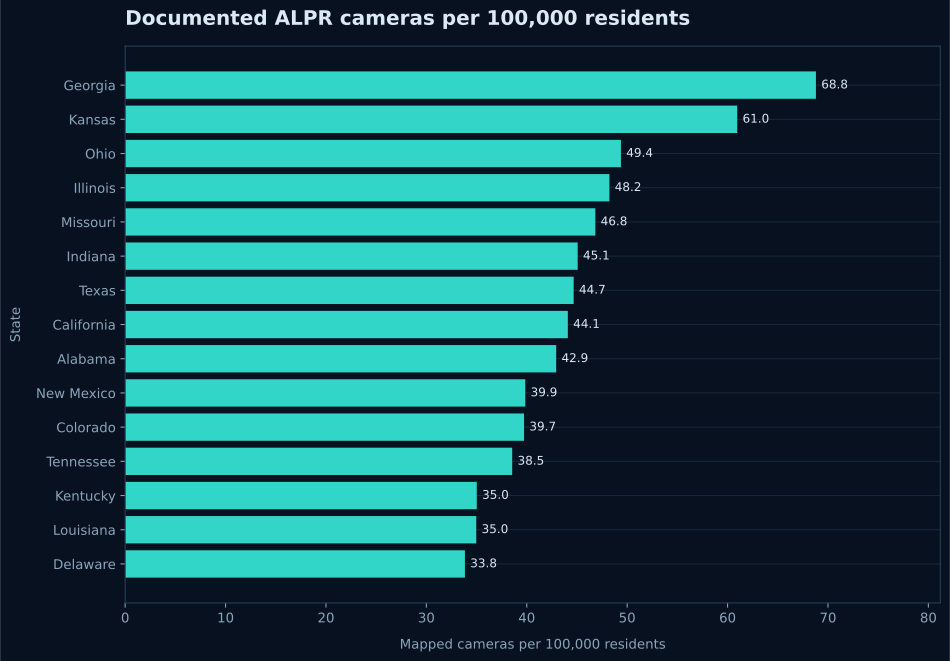
113,963publicly mapped cameras
Fifty-state OpenStreetMap-derived census. A lower bound—not a vendor inventory.
CAPTUREMASS SCALE
99.890%without a contemporaneous hit
California 2021–22 detections. “Non-hit” does not mean innocent or irrelevant.
FAULT LABREPRODUCED
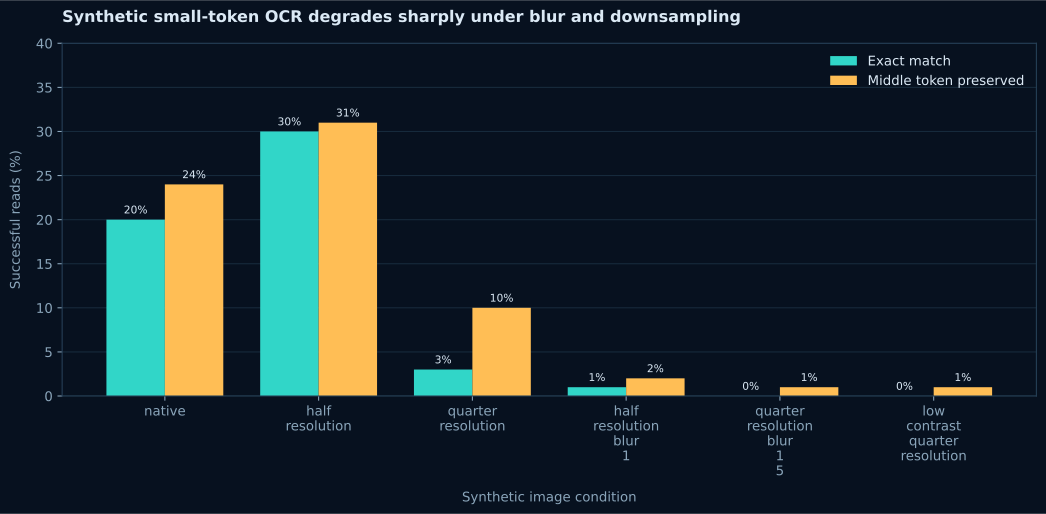
100:1identifier compression
Transparent synthetic middle-token-loss model; not a Flock accuracy estimate.
4,084 Atlas rowsdeployment records, not cameras
3.224B detectionsCalifornia · 2021–22
29 incidentsdocumented cases, not prevalence
600 OCR inferencessynthetic lab · local CPU
02 / WORKING CONCLUSION
The decisive error is often not the first one.
A bad read becomes dangerous when interfaces hide ambiguity, databases distribute it, policies permit broad access, and officers treat the alert as self-authenticating suspicion.
Review twelve breakpoints03 / MEASURED OUTPUTS
Two views into the public evidence.
04 / RESEARCH INDEX